Apple iPhone 18 Pro Max appears in Dark Cherry in hands-on video

The day after tomorrow is the big day – the Apple iPhone 18 Pro, Pro Max, and the first foldable iPhone Ultra will finally be unveiled. Ahead of the event, a hands-on video of the Pro models has surfaced. The leaked video allegedly shows demo units of the iPhone 18 Pro Max in Dark Cherry and the iPhone 18 Pro in a blue hue.
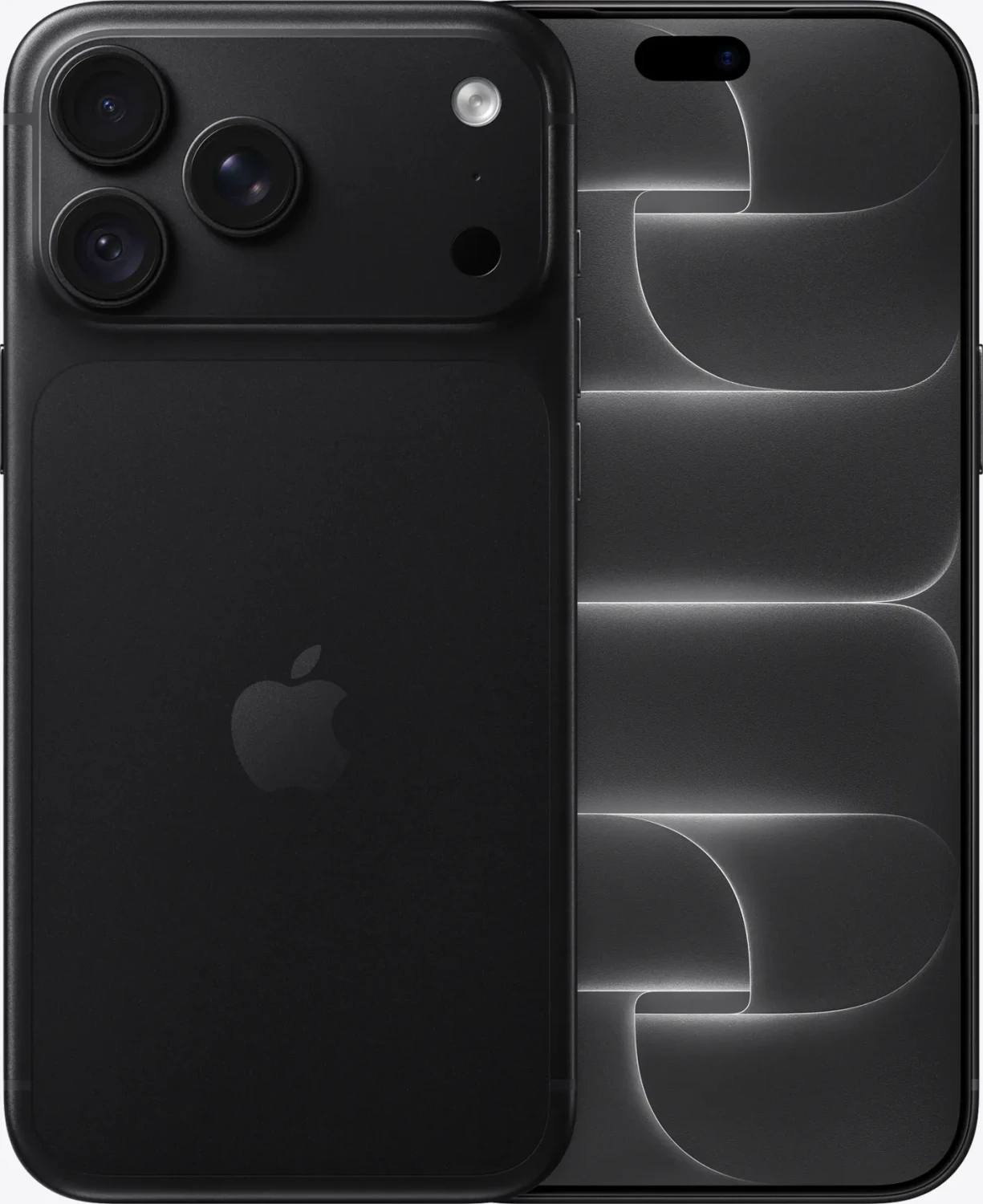
According to a recent leak, the iPhone 18 Pro series will be available in Dark Cherry, Black, and Sky Blue. Dark Cherry, also known as Burgundy, is expected to be the trend color of the year.
In terms of design, the upcoming iPhones are not expected to feature any major changes compared to the iPhone 17 Pro series. The new color options are likely to be one of the most noticeable differences.
Apple iPhone 18 Pro: M6 chip and A20 chip compared
Last week, shortly before its September iPhone event, Apple announced the M6 chip, providing the clearest indication yet of what the upcoming A20 in the iPhone 18 series will be capable of. The Apple A and M series share many platform specifications, so a new A-series chip typically serves as a preview of the subsequent M-series chip.

This year the order was reversed: The M6 was unveiled on August 25th, even before the A20 Pro, which is expected in the iPhone 18 Pro this month. Recent reports indicate that the A20 Pro is up to 18% faster and up to 30% more energy-efficient compared to the A19 Pro, roughly the same difference as between the M6 and M5.
Apple iPhone 18 Pro with first 2nm iPhone chip
The M6 is Apple’s first chip manufactured using TSMC’s 2nm (N2) process; the second will almost certainly be the A20. Thanks to the smaller manufacturing process, N2 offers a higher transistor density, allowing Apple to achieve more performance in a smaller footprint.

Apple has historically introduced new manufacturing processes with its A-series chips, as iPhone production figures confirm the yield. The introduction of the N2 process in the $899 Mac mini is therefore a new development. Reports that the A20 and A20 Pro will switch to the N2 process are now based on an already available product and no longer solely on analyst forecasts. Consequently, the claim that this is Apple’s first 2nm chip is no longer valid.
Dual neural engine?
The iPhone’s Neural Engine has operated with 16 cores and around 35 trillion operations per second since the A17 Pro, spanning three generations. The M6 introduces a dual 16-core Neural Engine, which, according to Apple, can be accessed simultaneously by system frameworks, thus doubling the maximum processing power of previous generations.
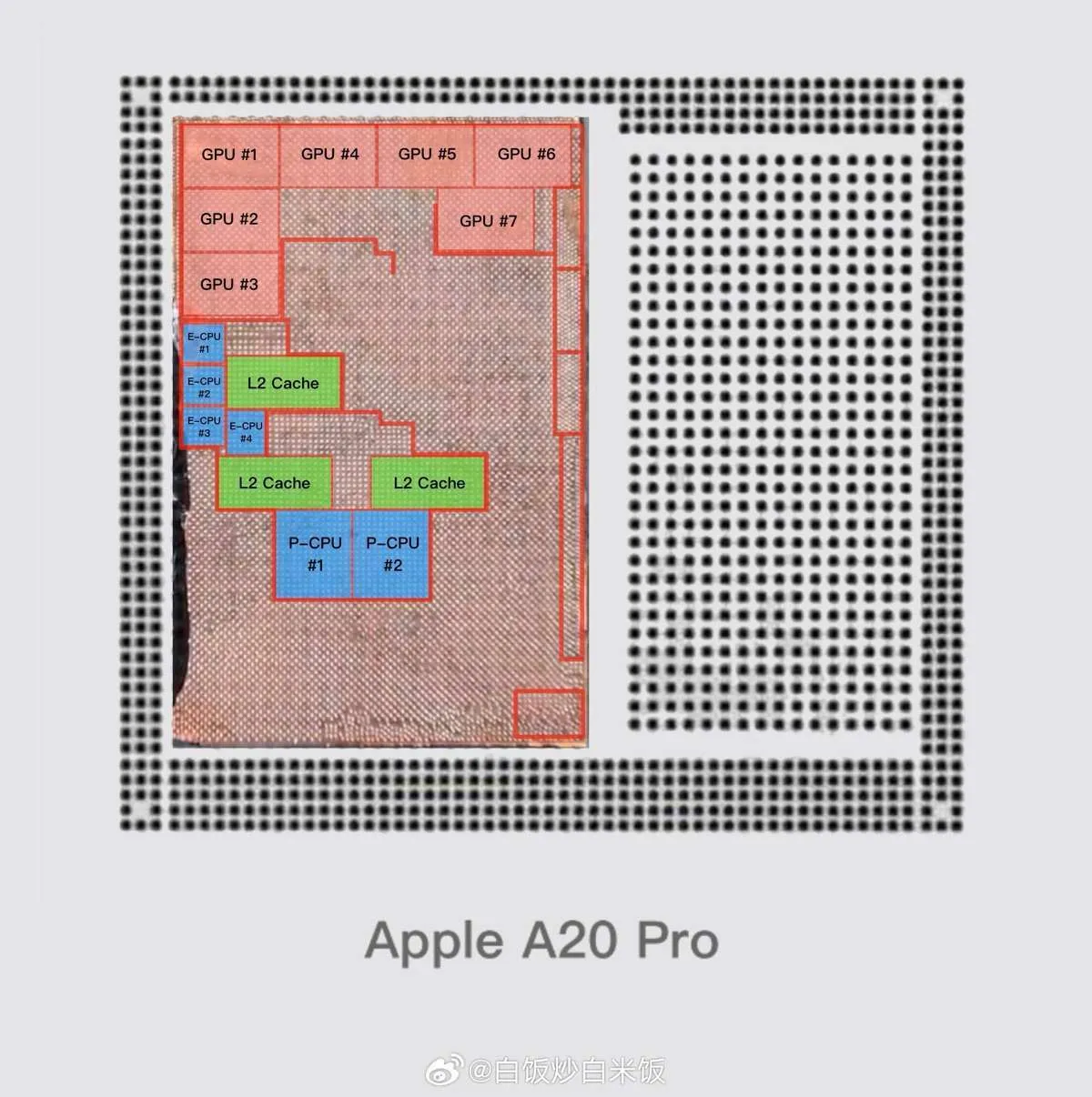
This change corresponds to the reported switch to WMCM package technology, where memory, CPU, GPU, and Neural Engine are integrated on the same wafer to shorten interconnect paths. It’s possible that chip area and thermal limitations restrict the use of a dual-engine to the A20 Pro.
AI improvements to GPUs
Apple stated that the M5 delivers four times the peak GPU computing power for AI compared to the M4, due to the introduction of neural accelerators in each GPU core. The M6 is nearly 30% faster than the M5.
The A19 Pro achieved a comparable fourfold improvement over the iPhone 17 Pro last September for the same architectural reason. Second-generation Neural Accelerators therefore appear to represent an evolution rather than a quantum leap, suggesting that the A20 Pro will not replicate the peak performance of the A19 Pro.
Graphics
The M6 offers 50% higher geometry calculation rates, an updated shader core architecture, reworked dynamic caching, and hardware-accelerated ray tracing. These are architectural changes; comparable graphics improvements have been implemented in the past in the A and M series of the same generation.
Higher memory bandwidth
Memory bandwidth determines how quickly data is transferred between memory and the processor and is the primary factor limiting the execution of large language models on the device. The M6 offers up to 170 GB/s, which Apple claims represents a 10% increase over the M5’s 153.6 GB/s.
This slight increase suggests that Apple is using a faster variant of the same LPDDR5X memory, rather than switching to the newer LPDDR6 standard, which would have allowed for a significantly larger leap. Reportedly, Apple sources the high-speed LPDDR5X memory for the iPhone 18 series from Samsung, and the M6 chip is compatible with it.
This means that the A20’s memory bandwidth is unlikely to improve significantly. The A19 Pro achieves 76.8 GB/s, and a similar 10% increase would bring the A20 Pro to approximately 85 GB/s. Therefore, any noticeable improvement in the iPhone 18 Pro’s loading and execution speeds is likely due to the WMCM architecture, which shortens the data path, rather than the memory itself.
AV1 encoding is still missing
The M6 Media Engine supports hardware-accelerated H.264, HEVC, ProRes, and ProRes RAW with AV1 decoding, but without AV1 encoding, just like the M5. Since it is absent from a new manufacturing process for desktop chips, its use in the A20 Pro is highly unlikely.
Rumors suggest that the iPhone 18 Pro and iPhone 18 Pro Max will also feature a new rear camera with a variable aperture, a new modem, and slightly larger batteries. Unfortunately, the prices are also expected to increase.


