Apple iPhone 17 Pro and iPhone Air: Teardowns reveal new problems
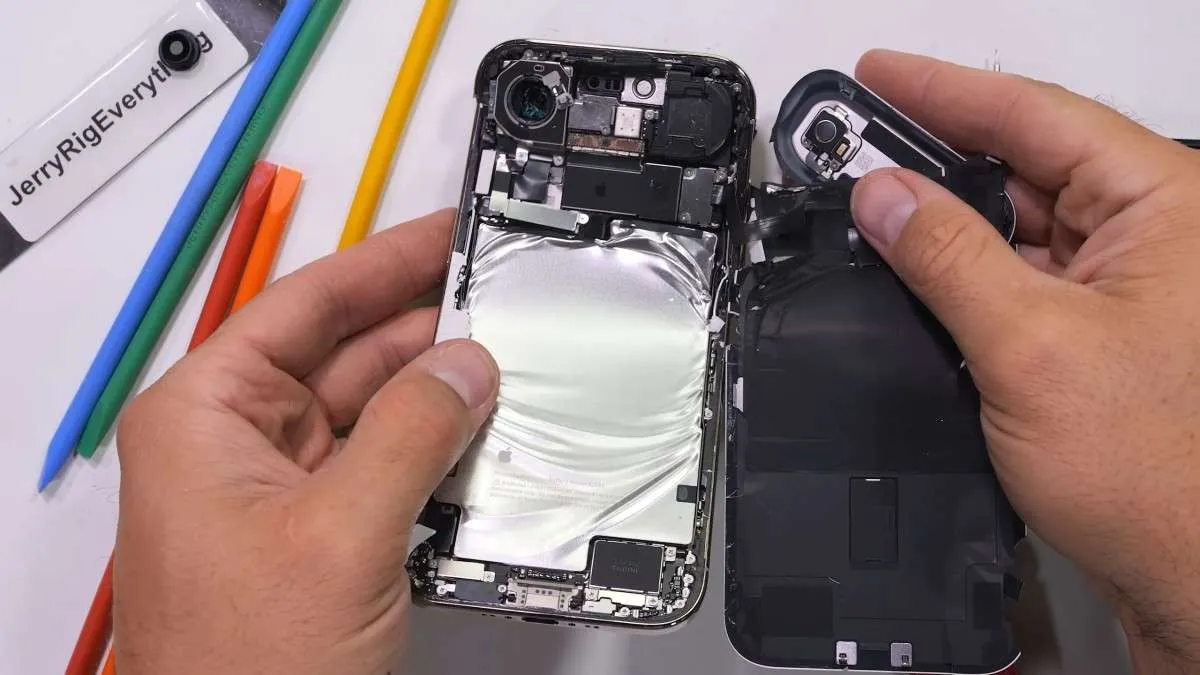
The Apple iPhone 17 Pro was taken apart by the repair specialists at iFixit, the Apple iPhone Air was taken apart by JerryRigEverything. Both new models showed: New design, new problems.
Apple iPhone 17 Pro: New design, new problems
The new Apple iPhone 17 Pro has a different design than the iPhone 16 Pro, and this includes more than just the switch from titanium to aluminum. The iFixit team disassembled the iPhone 17 Pro and described the process in detail in the video embedded below. The new aluminum frame features a glass window on the back that allows wireless charging and the magnetic force of the MagSafe magnets to pass through. However, it’s smaller than before—it no longer covers the entire back like it used to.
This means you can’t achieve much by removing the rear glass panel—most repairs now have to start with removing the screen. Once that’s removed, you can unscrew the midframe—one change the iFixit team really appreciated is that the battery is actually attached to this midframe, making it easier to remove.

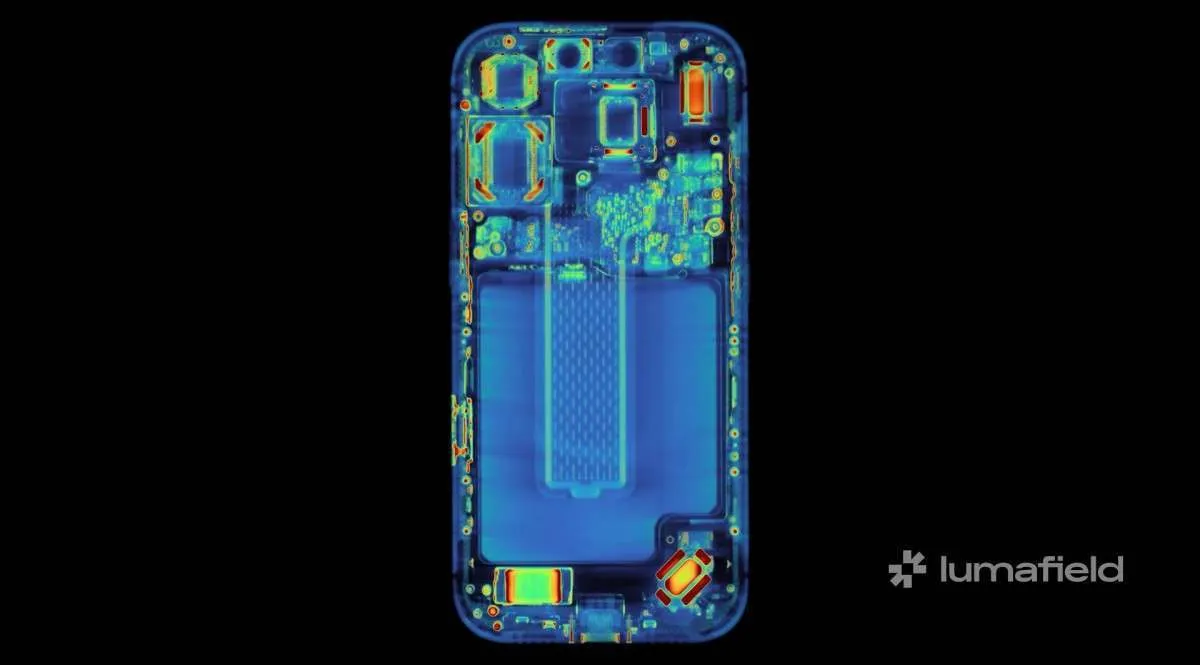
Overall, the iPhone 17 Pro received a preliminary repairability rating of 7/10—the same rating as last year’s iPhone 16 Pro. The main concerns are that most repairs require removing the display and replacing the USB-C port is quite tedious.
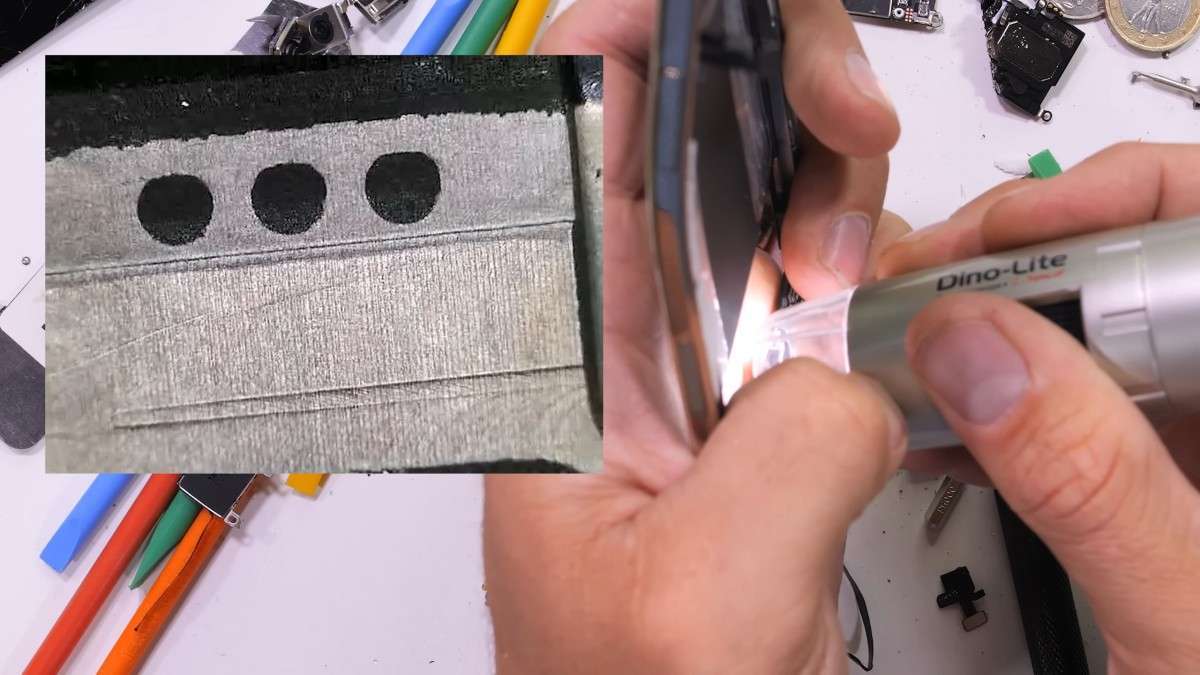
The iFixit video also addresses Scratchgate and explains why it occurs: The shape of the camera island weakens the anodizing that gives the iPhone 17 Pro its color at the sharp edge. Interestingly, the two Pro models are more susceptible to scratches than the standard iPhone 17, which is also made of anodized aluminum.
Apple iPhone Air teardown shows complicated construction
After JerryRigEverything’s typical Apple iPhone Air durability test, which also covered Scratchgate and bent the Air with a motor jack weighing over 97 kg, the teardown is now complete.
The back of the Apple iPhone Air is relatively easy to remove – all you need is some heat, a prying tool, and the removal of two pentalobe screws. Inside, you’ll find the metal-encased 3,149 mAh battery. Also visible are the MagSafe magnets and copper coils that enable wireless charging.
The iPhone Air’s display is held in place by a hefty amount of adhesive, a three-point screw, and two ribbon cables. The battery on the other side is secured with the same electrically removable adhesive as the iPhone 16 and iPhone 16 Plus. Once the special tabs on the battery come into contact with the correct voltage, they release the battery.
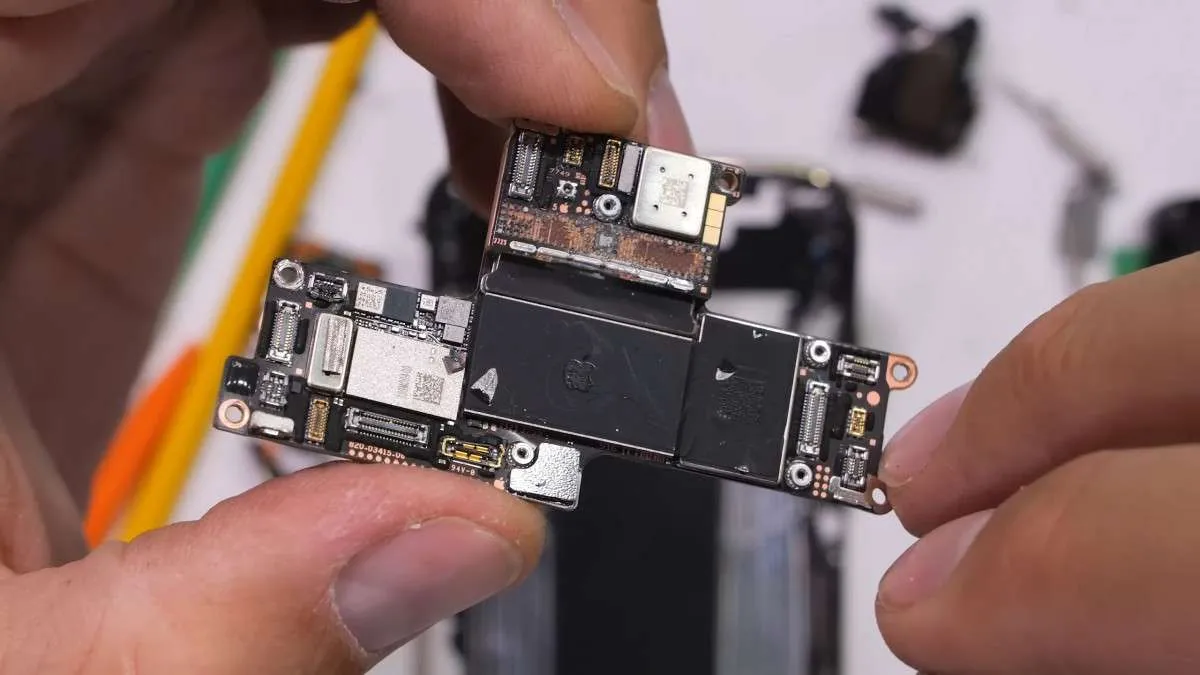
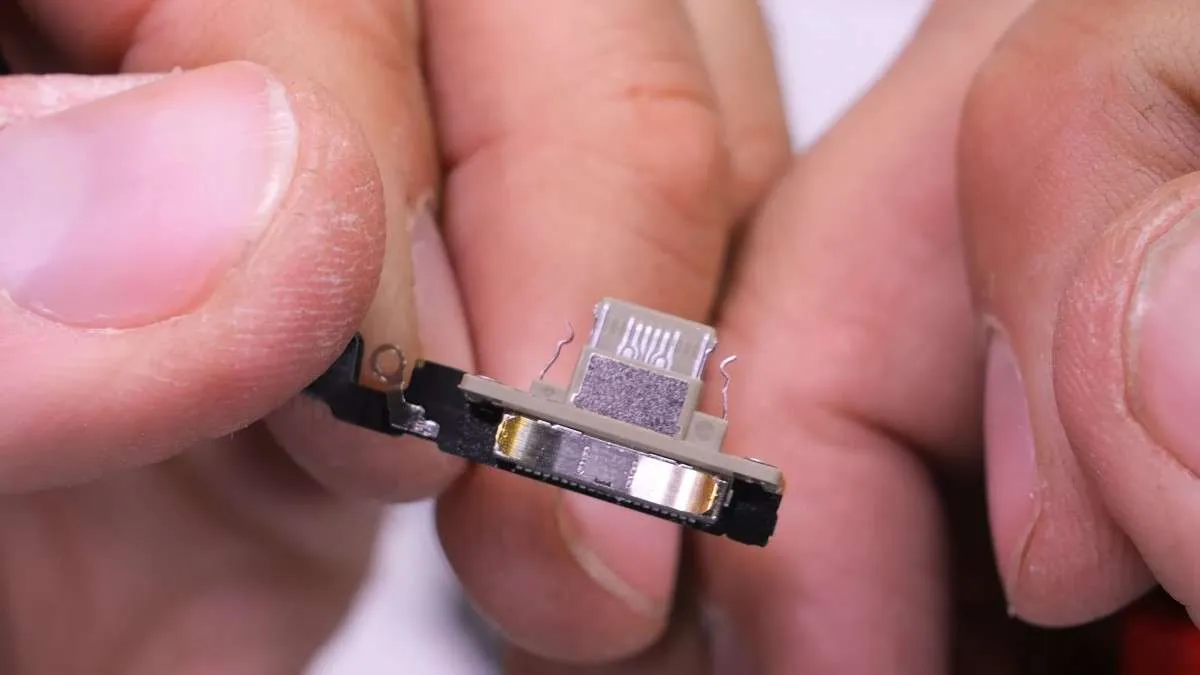
Then, the most important components such as the motherboard, the cameras, and the 3D-printed USB-C housing made of titanium are visible.


