Apple iPhone 20: New leak reveals design
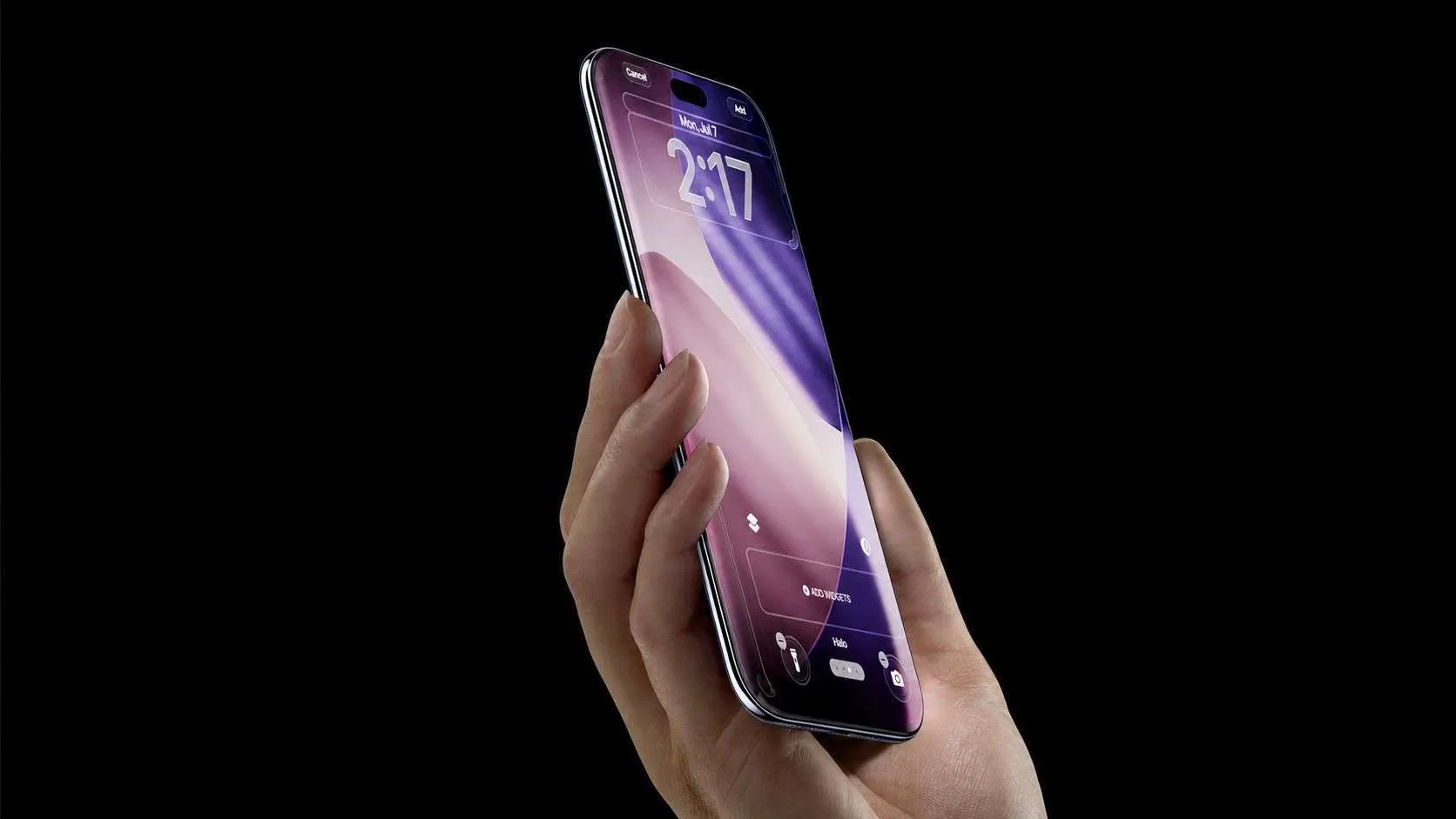
The Apple iPhone 20 is expected to be released in the fall of 2027 and will represent the most significant design overhaul since the iPhone X. In many ways, the device is likely to repeat the success story of the iPhone X, which removed the Home button and introduced an edge-to-edge display in 2017 to mark its tenth anniversary.
Rumors suggest that the 2027 model will fundamentally change the design language that has defined the iPhone since its inception and serve as the blueprint for the coming years. The Apple iPhone 20 will very likely be released in the fall of 2027, alongside the second generation of the foldable iPhone Ultra.
All-glass design with curved display
Glass is at the heart of the Apple iPhone 20. Bloomberg’s Mark Gurman described a curved iPhone made largely of glass, with no notches in the display. The back is also made of glass, and the curved glass wraps around all four edges of the device. It would be the clearest expression yet of former design chief Jony Ive‘s desire for an iPhone that resembles a single sheet of glass. Reports indicate that Apple’s supply chain facilities were renovated before production began, and the build quality is said to be comparable to that of the first-generation iPhone Air.

Instead of the “waterfall” edges that Samsung used for years on its Galaxy smartphones, the Apple iPhone 20 is rumored to have a uniformly deep, quadruple-curved display, whose curvature is very shallow thanks to so-called “micro-curves” instead of a strong curve at the sides. This gentler shape could make swipe gestures from the edge of the screen appear more natural, prevent distortion of screen content, and thus make the device more comfortable to hold.
The effect may not be solely due to physical curvature. Leaker Ice Universe suggests that it differs from conventional quadruple-curved displays or the curved screens of Android smartphones, relying instead on a combination of optical refraction, light-guiding structures, and a sophisticated optical illusion that makes the frame visually disappear. Apple could potentially incorporate this into its branding.
According to a report, the panel could be marketed as a “Liquid Glass Display,” in keeping with current software design language. An unconfirmed model, shared by an account of dubious credibility, showed a bezel around the display that was only 1.1 mm wide, compared to approximately 1.44 mm on the iPhone 17 Pro.
Apple iPhone 20 without Dynamic Island?
The front of the Apple iPhone 20 remains the most uncertain aspect of the design. Apple is reportedly aiming for a completely bezel-less front and wants to place both the Face ID system and the selfie camera under the display. According to one report, a “framed, microtransparent glass window” will be used, through which the infrared sensors of Face ID shine.

Ross Young of the DSCC explained, however, that the technology is not expected to be fully mature before 2027. Although Apple continues to test an under-display camera, it seems likely that a small hole or a smaller version of the Dynamic Island expected from the iPhone 18 Pro models will be retained.
Two size options
Apple is reportedly planning two anniversary models with screen sizes of approximately 6.3 and 6.9 inches, corresponding to the iPhone 18 Pro and Pro Max. However, the larger model could be slightly bigger due to its narrower bezels and marketed as a 7-inch device.
Thin, polished frame
The frame of the Apple iPhone 20 is expected to consist of a thin, polished band, but the material is still unclear. Rumors suggest a departure from the aluminum used in current Apple models, but leaker Fixed Focus Digital contradicts claims that Apple is planning a return to titanium or a switch to liquid metal.
He argues that aluminum is currently the only viable option, given the heat generated by the AI processing in the Apple iPhone 20. The same leaker specifically describes aluminum as a material for smartphones with straight edges – a distinction that leaves room for a different approach for the anniversary model with its rounded edges.
Haptic buttons
Rumors are circulating that Apple is re-evaluating the development of haptic physical buttons for the device. The company reportedly wants to revive the long-dormant “Project Bongo” to replace the mechanical side buttons, volume buttons, action button, and camera controls with haptic buttons integrated into the frame that do not trigger any physical movement when pressed.
The absence of openings necessary for mechanical buttons is a perfect fit for an Apple iPhone 20, which is designed to look like a pristine piece of glass. The buttons have reportedly passed operability tests with gloves, wet hands, extreme temperatures, and a protective case. An extremely energy-efficient microprocessor is said to ensure functionality even when the iphone is switched off or the battery is depleted.


