Valve Steam Machine and Steam Controller introduced
Valve has announced three new hardware devices in the Steam hardware family. The Valve Steam Machine, the Steam Controller, and the Steam Frame build upon the platform and success of the Steam Deck and expand it for a wider audience.
Valve Steam Machine
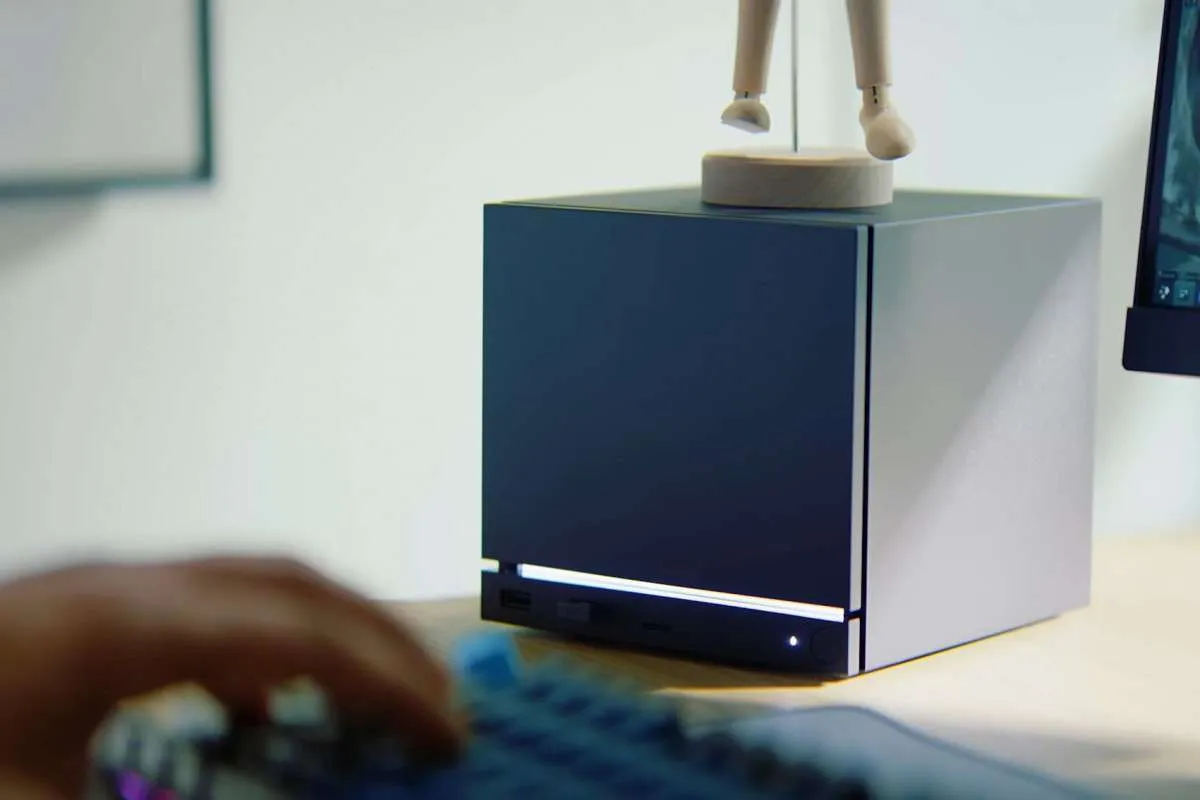
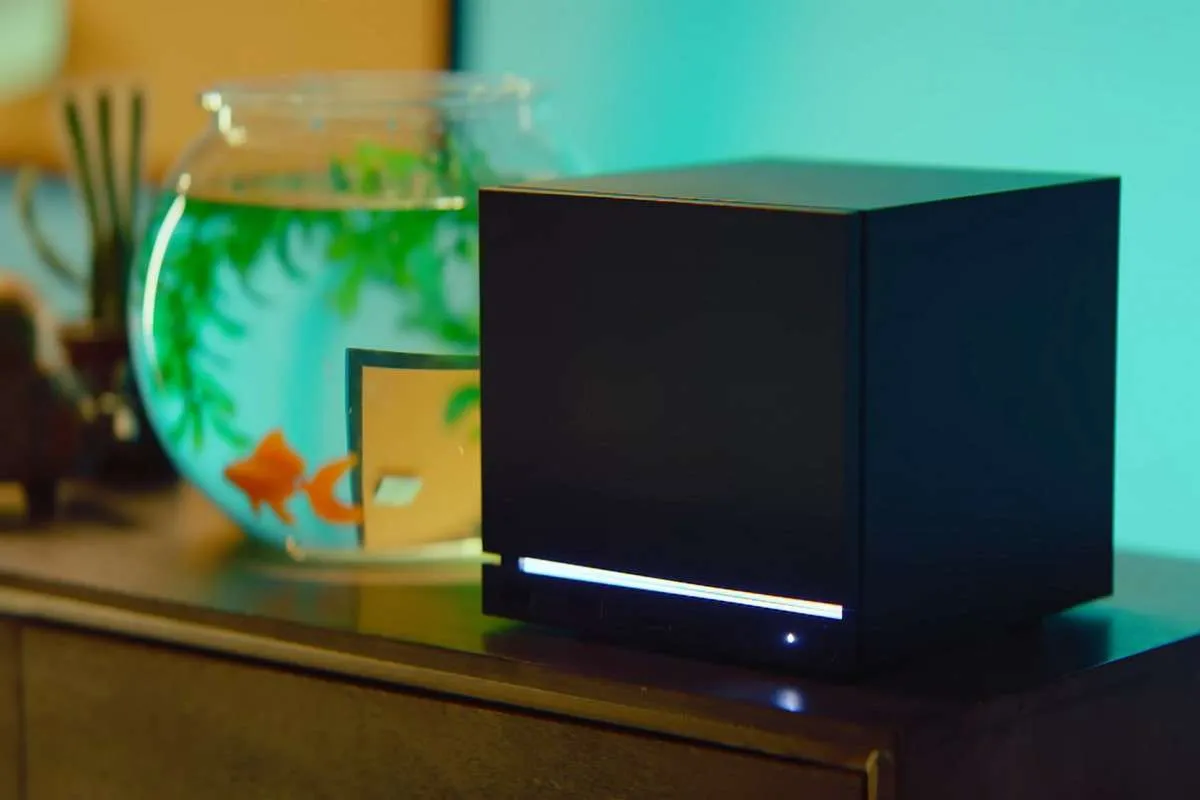
The first major device is the new Valve Steam Machine. The Steam Machine concept has existed for a decade through various devices from other manufacturers, but this is the first time Valve has produced such a machine. It’s a compact, cuboid-shaped device, essentially a Steam Deck designed for use with a living room TV.
The Valve Steam Machine runs on an AMD chip with 6 cores and 12 threads based on the Zen 4 architecture. The CPU clocks at up to 4.8 GHz and has a TDP of 30 W. It’s similar to the Ryzen 5 7400F, but requires significantly less power. It also features an AMD RDNA3 GPU with 28 compute units. It clocks at up to 2.45 GHz and has a TDP of 110 W. The GPU is a cut-down version of the Radeon RX 7600, but has 12.5% fewer compute units and also significantly lower power consumption.

The Valve Steam Machine has 16 GB of DDR5 RAM and 8 GB of GDDR6 video memory. The RAM seems sufficient, but we’ve already seen that 8 GB of video memory isn’t enough in current games, even at 1080p. And Valve is advertising this device as 4K-capable.
You have some flexibility with the storage space on the Valve Steam Machine. Valve offers configurations with 512 GB and 2 TB, and you can also use microSD cards. The microSD cards initially seem unusual, until you realize that you can simply use your existing Steam Deck cards or vice versa, without having to reinstall games already on the card. The SSD is also replaceable with standard M.2 drives.
The Valve Steam Machine offers 2.2 GHz Wi-Fi 6E, Bluetooth 5.3 with a dedicated antenna for controllers, a dedicated 2.4 GHz wireless adapter for the Steam Controller, DisplayPort 1.4 for up to 4K 240 Hz and HDMI 2.0 with up to 4K 120 Hz output and support for DSC, VRR, HDR, and HDMI CEC, 2x USB-A 3.2 Gen 1 ports, 2x USB-A 2.0 ports, 1x USB-C 3.2 Gen 2 port, and Gigabit Ethernet.
The device features a customizable RGB LED strip on the front, which can, for example, display your Steam download progress. There’s also a removable front panel that can be customized.
Like the Steam Deck, the Valve Steam Machine runs on Valve’s highly acclaimed, Linux-based SteamOS, now optimized for TVs. Just like with the Steam Deck, you can download and run most Steam games via the translation layer. A KDE Plasma desktop environment is also available if you prefer to use traditional Linux desktop applications.
Valve Steam Controller
Alongside the Valve Steam Machine, the matching Steam Controller was also released. Technically, this is the second-generation model, as the first generation was released years ago and, much like the early versions of the Steam Machine, wasn’t very successful. The new model is once again based on the Steam Deck, combining proven features with new ideas.

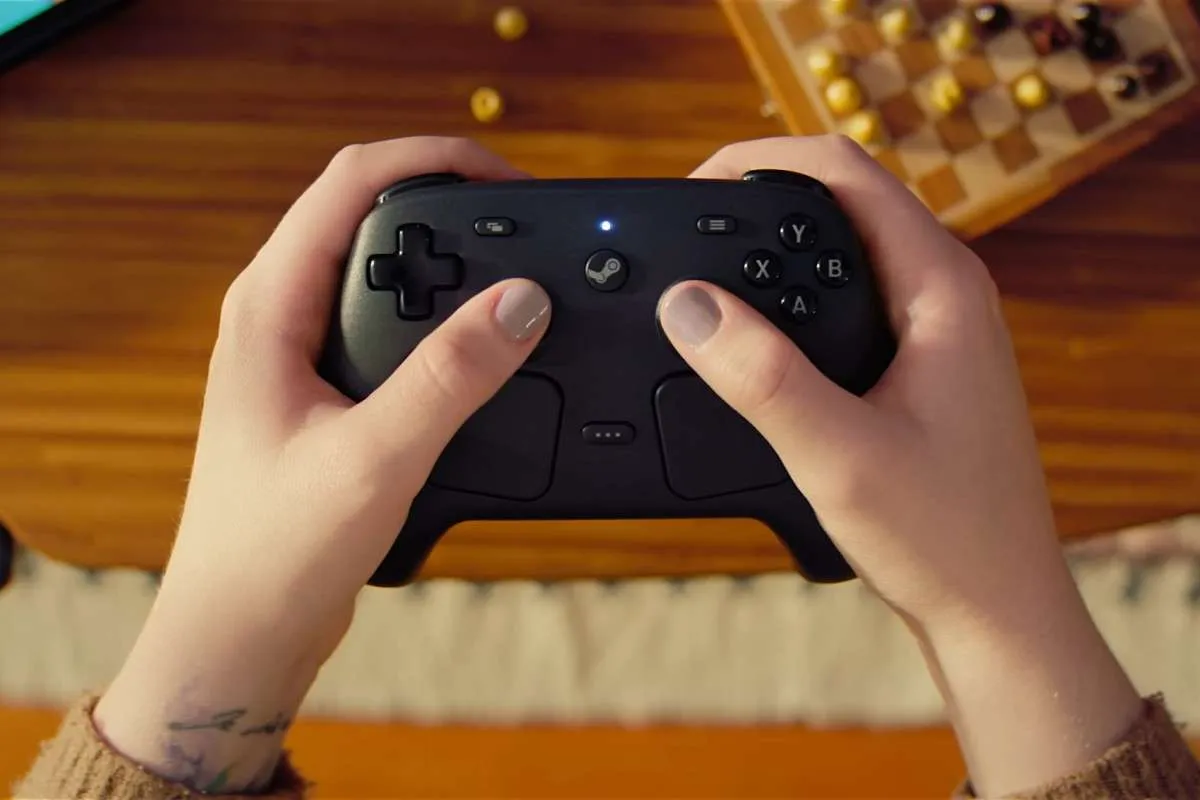
The new Steam Controller has a similar design and layout for joysticks and buttons as the Steam Deck. The joysticks utilize Valve’s second-generation magnetic technology for improved feel, responsiveness, and reliability. They also feature capacitive touch surfaces for motion control. The controller also offers HD Haptics and 6-axis gyroscope support.
Below the joysticks are the two pressure-sensitive trackpads. These function essentially as expected, except there are two of them. You can use them to navigate the SteamOS user interface or play games that support mouse input but not controller input. This was the defining feature of the original Steam Controller, and this new model integrates into a traditional controller layout rather than making it the primary method of play.
The controller also features buttons on the back, two on each grip, as well as a capacitive touch surface that detects when you’re holding the controller. The magnetic puck connector, which also serves as the wireless transmitter, attaches to the back. A USB-C port for charging with standard cables is also included.
The Steam Controller is included as standard with every Valve Steam Machine. It works natively with the machine via a dedicated 2.4 GHz wireless connection with a total latency of 8 ms and a polling rate of 4 ms. Up to four controllers can be paired with a Steam Machine simultaneously. Alternatively, it can be used with a Windows PC via USB or Bluetooth. The battery life is over 35 hours, though it’s unclear whether this figure is based on the dedicated wireless connection or the power-saving Bluetooth connection.
The Steam Machine and Steam Controller will be released in early 2026. Pricing and exact availability information will follow later. The company also announced the new Steam Frame VR headset.


