Comparison test: Apple MacBook Pro 14″ M5 vs. MacBook Air M4

Apple first updated the MacBook Air with the M4 chip in 2025 and has now introduced the MacBook Pro with the new M5 chip. So how do the latest models compare? While the Apple MacBook Air M4 continues to start at €1,099, the Apple MacBook Pro 14″ M5 costs at least €700 more.
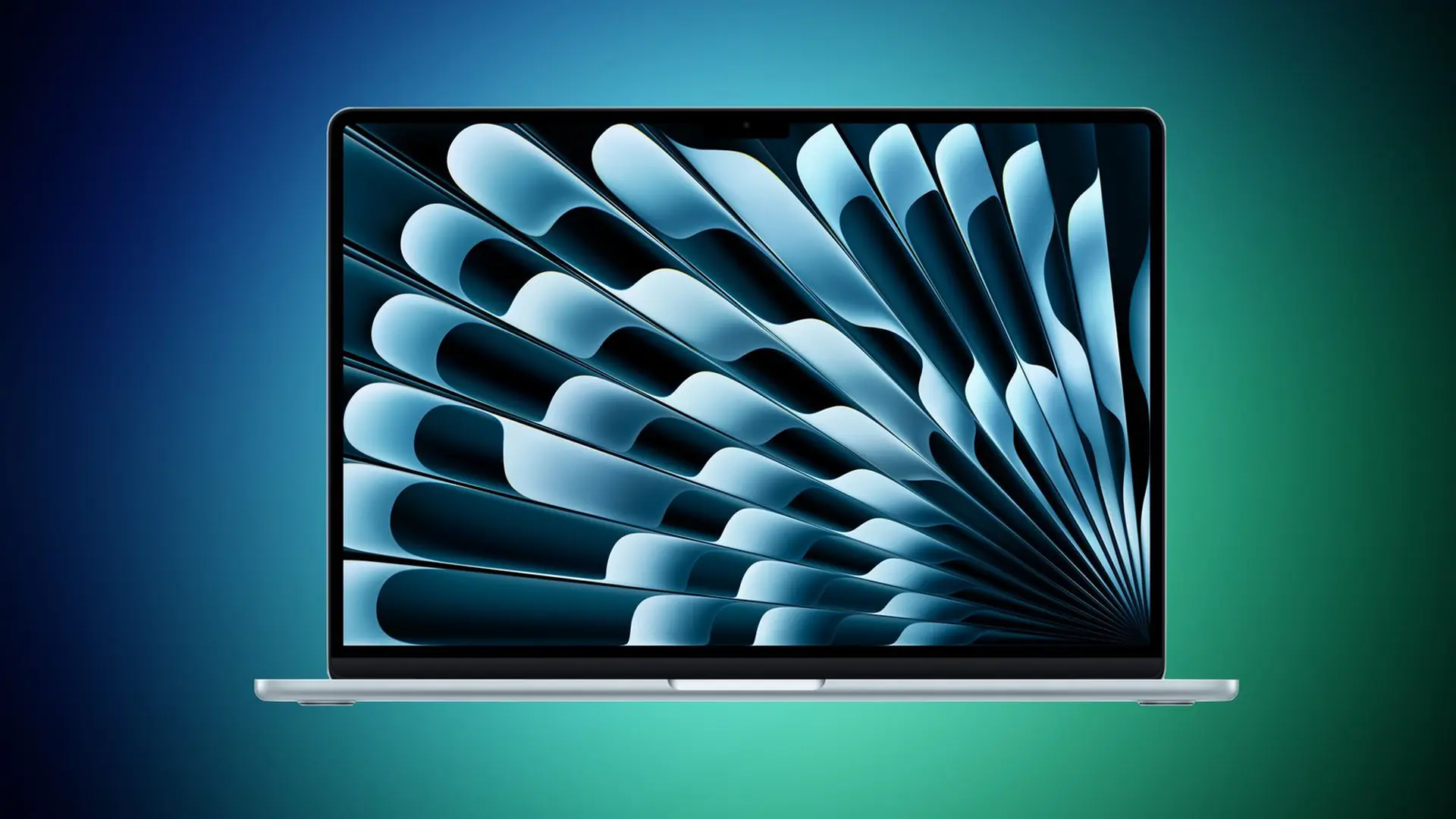

For some buyers, the additional cost is unnecessary. For others, the hardware advantages of the Apple MacBook Pro 14″ M5 offer tangible performance advantages that the MacBook Air M4, even with more powerful configurations, cannot match. Our comparison test will help you decide which of the two popular MacBooks is the best choice for you. In addition to the chipsets, here are the most important differences.
Apple MacBook Pro 14″ M5 vs. MacBook Air M4
| Apple MacBook Air M4 | Apple MacBook Pro 14″ M5 |
|---|---|
| 13.6- or 15.3-inch display | 14.2-inch display |
| Slimmer bezels around the display | |
| LCD Liquid Retina display | Mini-LED Liquid Retina XDR display |
| 60 Hz refresh rate | ProMotion for refresh rates up to 120 Hz |
| Up to 500 nits brightness | Up to 1,000 nits brightness and 1,600 nits HDR peak brightness |
| Display option for Nanotextures | |
| Passive cooling | Active cooling |
| Two Thunderbolt 4 (USB-C) ports | Three Thunderbolt 4 (USB-C) ports |
| HDMI 2.1 port with support for multi-channel audio output | |
| SDXC card slot | |
| 13-inch: Four-speaker sound system 15-inch: Six-speaker sound system with force-cancelling woofers | Hi-Fi six-speaker sound system with force-cancelling woofers |
| Three-microphone array with directional Beamforming | Studio-quality three-microphone array with high signal-to-noise ratio and directional beamforming |
| 256 GB, 512 GB, 1 TB, or 2 TB storage | 512 GB, 1 TB, 2 TB, or 4 TB storage |
| 13-inch: 53.8 watt-hour lithium-polymer battery 15-inch: 66.5 watt-hour lithium-polymer battery | 14-inch: 72.4 watt-hour lithium-polymer battery |
| 18-hour battery life | |
| 30 W, 35 W, or 70W USB-C Power Adapter | 70W or 96W USB-C Power Adapter |
| Color options: Silver, Sky Blue, Starlight, or Midnight | Color options: Silver or Space Black |
| Starting at €1,099 (13-inch) / €1,399 (15-inch) | Starting at €1,799 |
Dimensions
Dimensions are also a key difference between the Apple MacBook Pro 14″ M5 and the MacBook Air M4. The MacBook Pro is significantly thicker and heavier than both MacBook Air models.
| Apple MacBook Air 13 M4 | Apple MacBook Air 15 M4 | Apple MacBook Pro 14″ M5 | |
|---|---|---|---|
| Height | 1.13 cm | 1.15 cm | 1.55 cm |
| Width | 30.41 cm | 34.04 cm | 31.26 cm |
| Depth | 21.5 cm | 23.76 cm | 22.12 cm |
| Weight | 1.24 kg | 1.51 kg | 1.55 kg |
Performance
With the latest version of the MacBook Pro, Apple touts the performance of the M5 chip. Compared to the M4, the M5 is said to offer the following updates:
- Up to 15% faster multi-threaded CPU performance
- Up to 30% faster overall graphics performance
- Up to 45% faster ray tracing performance
- 27.5% higher unified memory bandwidth
In addition to the general performance figures, Apple has published a number of specific real-world workload results showing measurable improvements in AI-driven applications:
- 4x more peak GPU processing power for AI
- 3.6x faster time to first token (LLM)
- 1.8x faster Topaz Video Enhance AI Processing
- 1.7x faster Blender ray tracing rendering
- 2.9x faster AI speech enhancement in Premiere Pro
Chipsets
Other notable changes compared to the MacBook Air M4 include:
| M4 Chip | M5 Chip |
|---|---|
| Made with TSMC’s second-generation 3nm process (N3E) | Made TSMC’s third-generation 3nm process (N3P) |
| Based on A18 Pro chip from iPhone 16 Pro | Based on A19 Pro chip from iPhone 17 Pro |
| No integrated Neural Accelerators | Integrated Neural Accelerator in every GPU core |
| Metal 3 developer APIs | Metal 4 developer APIs with Tensor APIs to program GPU Neural Accelerators |
| Second-generation ray tracing engine | Third-generation ray tracing engine |
| First-generation dynamic caching | Second-generation dynamic caching |
| Shader cores | Enhanced shader cores |
| 120 GB/s unified memory bandwidth | 153 GB/s unified memory bandwidth |
Overall, the Apple MacBook Air 13″ 2025 M4 remains the best choice for users with light to medium workloads who value mobility and affordability over sustained performance. The entry-level price makes it affordable for most buyers. For everyday tasks like email, light productivity, browsing, and media consumption, it offers performance that’s virtually indistinguishable from more expensive models. The thinner chassis, lighter weight, and color choices are also important advantages for many.


In contrast, the Apple MacBook Pro 14″ M5 is designed for those whose work requires significantly more power or greater longevity, justifying the premium. The combination of a more advanced chip, a Mini-LED XDR display with ProMotion, active cooling for sustained performance reserves, a dedicated HDMI port with multi-channel audio support, an SDXC card slot, a third Thunderbolt port, more storage capacity, larger storage options, improved speakers and microphones, and significantly longer battery life results in a MacBook with significantly different capabilities.



If you plan to perform intensive tasks in video editing, 3D workloads, software development, or AI-driven tasks, the Apple MacBook Pro 14″ M5 is designed to avoid the thermal and bandwidth limitations of the Air.
An exception is the Apple MacBook Air 15″ 2025 M4, which costs at least €1,399. If you go even one step further in the configuration to 512 GB of storage for €1,649, you’re only €150 away from the cheapest Apple MacBook Pro 14″ M5 for €1,799. For the extra cost, the Pro offers a significantly better display, active cooling, six hours more battery life, better speakers and microphones, an additional Thunderbolt port, and integrated HDMI and SDXC ports.
In this price range, the Pro is likely the better long-term choice for most buyers, unless display size or light weight are the most important factors.


