Samsung Galaxy A38 appears in benchmark test
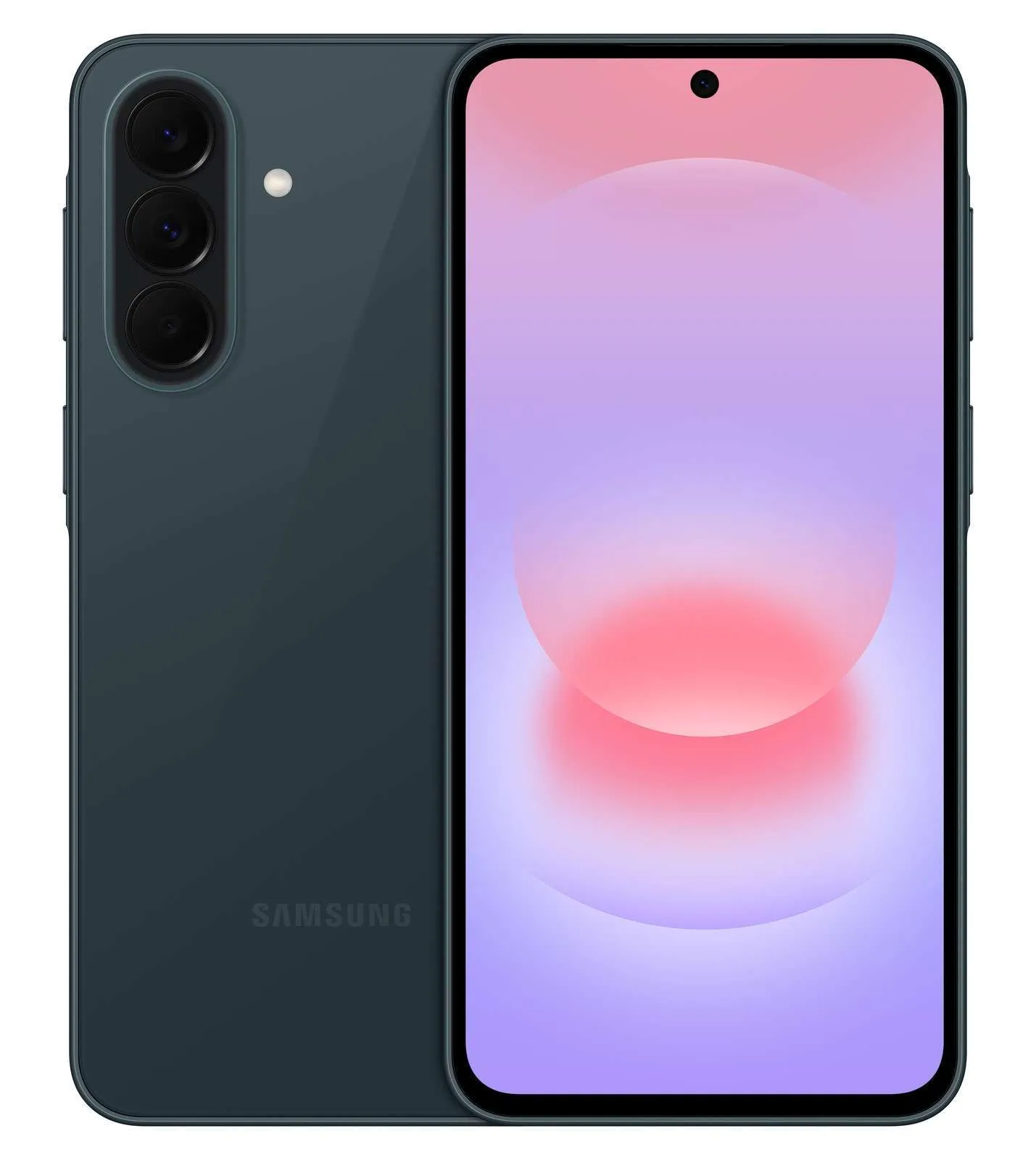
Samsung unveiled the Galaxy A37 in March and released it in April. The development of its successor, the Samsung Galaxy A38, is therefore nearing completion, and its release in the first quarter of 2027 is likely. The device has now been discovered in the Geekbench online database with the model number SM-A386B.
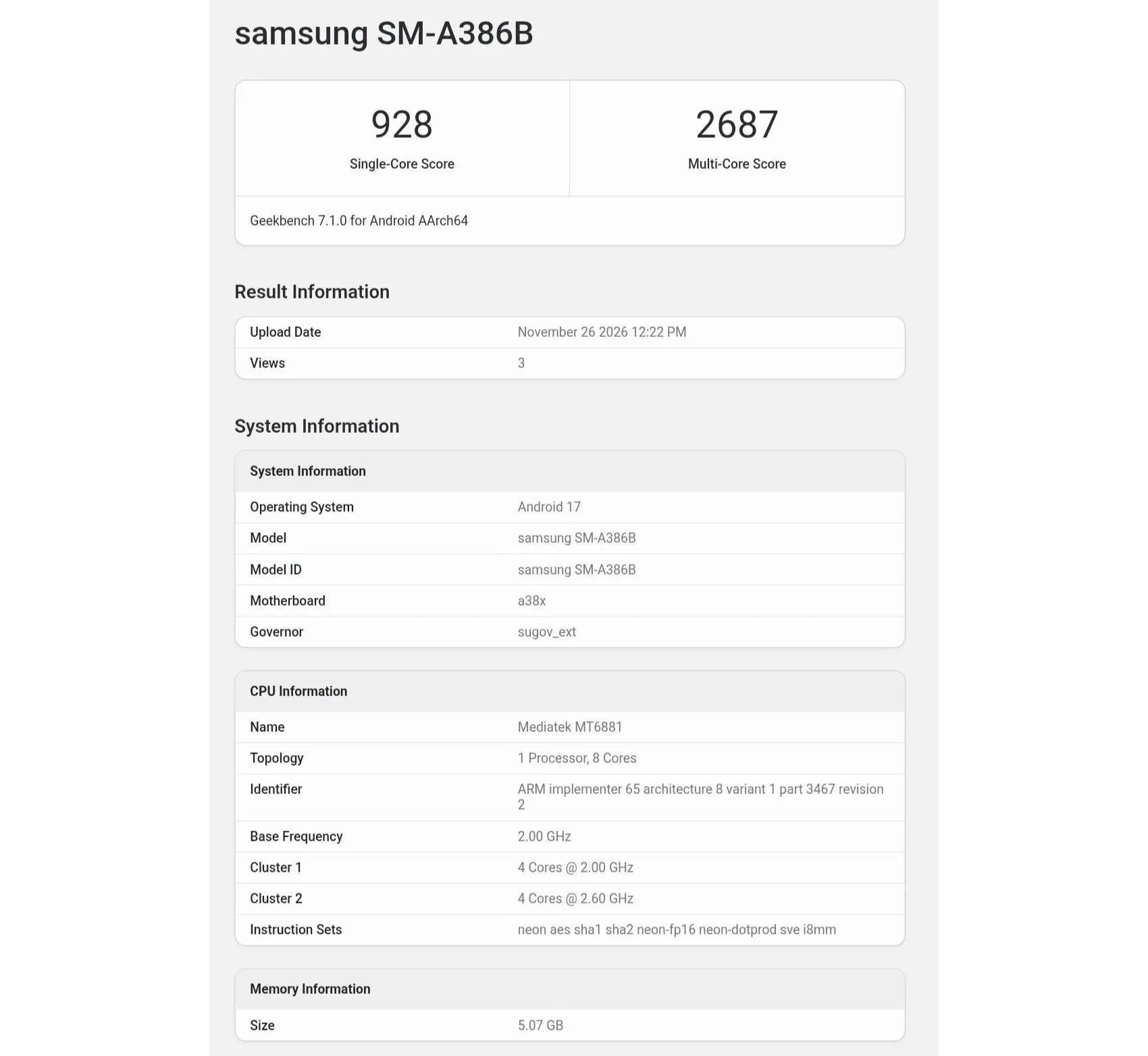
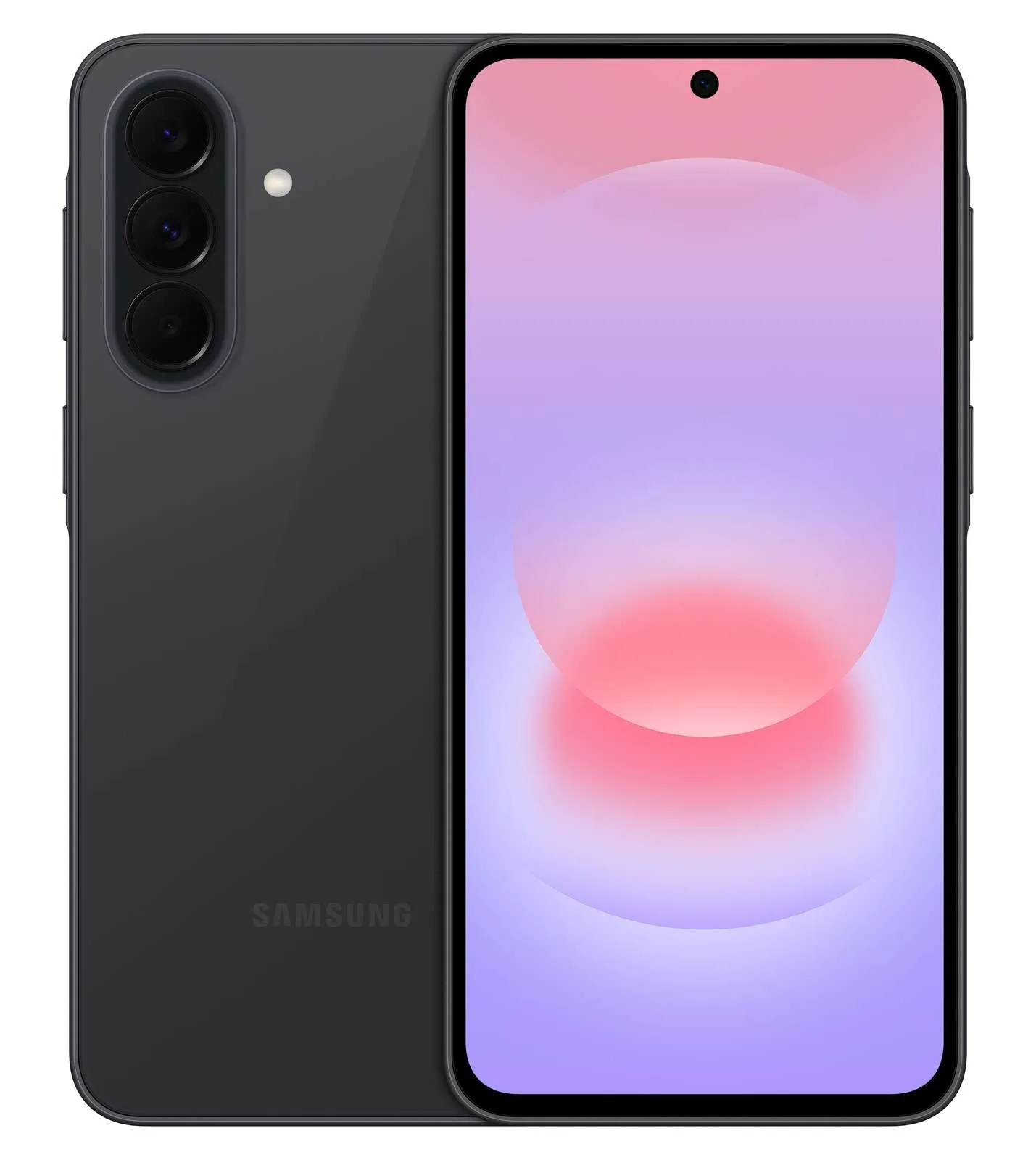
The test was performed on the global model, which is powered by a MediaTek Dimensity 7500 chipset, equipped with 6 GB of RAM in the tested prototype. The smartphone is expected to launch with Android 17 and the One UI 9 user interface.
As you can see in the screenshot above, the Samsung Galaxy A38 achieved a single-core score of 928 and a multi-core score of 2,687 in Geekbench 7.1.0 for Android. Interestingly, Samsung still used the Exynos 1480 in the A37, while the A38 switched to a MediaTek processor. It’s worth noting that the A38, like its predecessor (available with 6GB to 12GB of RAM), may be offered with different RAM configurations.
Samsung Galaxy A38 with camera downgrade?
According to the latest rumors, Samsung is planning a camera downgrade for its mid-range smartphone. At first glance, the Samsung Galaxy A38 appears to have the same 50MP main camera on the back, but a closer look at the specifications reveals a smaller 1/1.95″ Sony IMX882 sensor, compared to the 1/1.56″ Sony IMX906 used in the Galaxy A37.
This decision to cut costs appears to be in line with current market conditions. Rising memory chip prices have reduced profit margins on cheaper smartphones, prompting companies to seek alternative ways to save on production costs. The Samsung Galaxy A38 is expected to feature a larger 6,000 mAh battery, compared to the 5,000 mAh battery in its predecessor.



The news of the downgraded Galaxy A38 came shortly after the announcement that the company plans to restructure its entire product portfolio – Galaxy Watches will be updated every two years, while production and costs of the Galaxy A series will be reduced to make room for higher-end devices such as the Galaxy S series.


